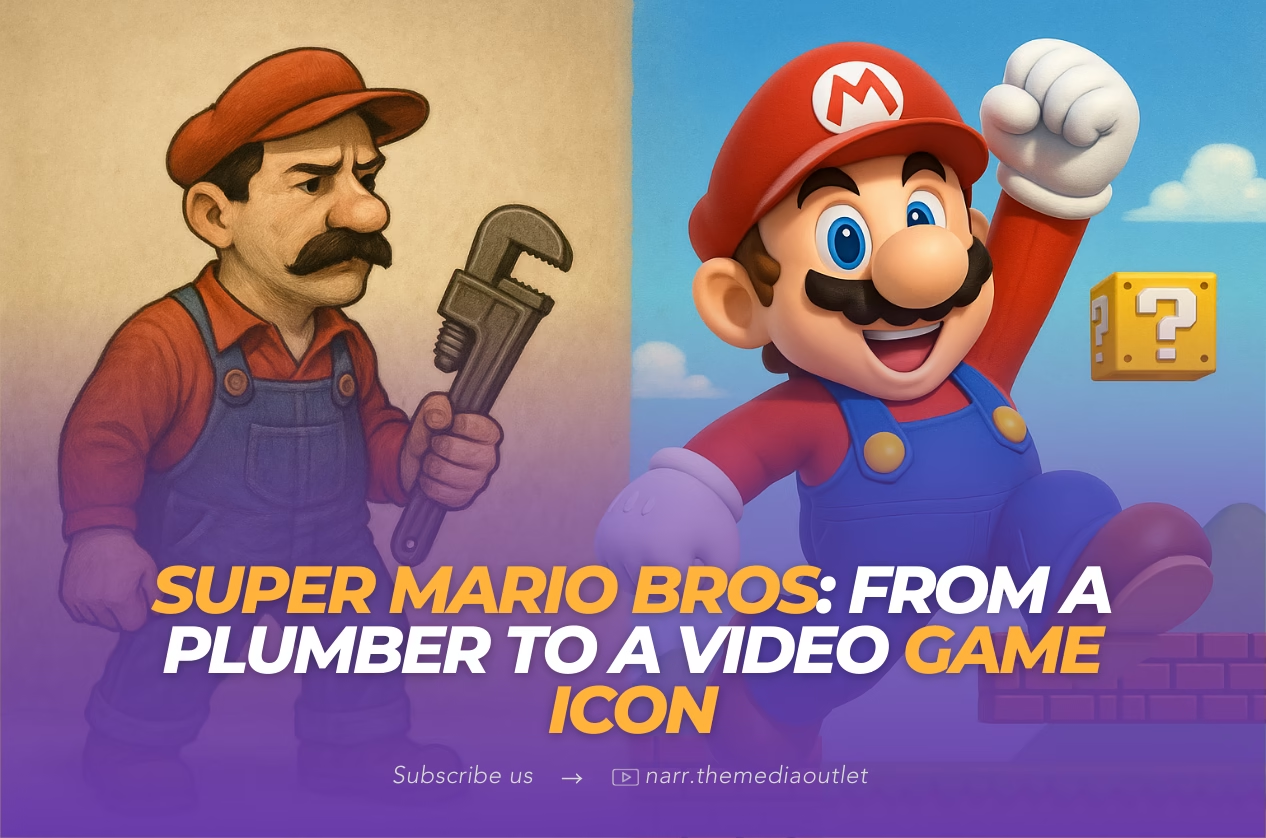
It’s been four decades since gamers were first introduced to Super Mario Bros.
It’s been for a duration of four decades since Super Mario Bros. was introduced for gamers.
Japan saw its first release in 1985. The Nintendo Entertainment System (NES) was in fact the original platform of all.
Since that time, because the game had sold nearly 40 million copies worldwide, it is truly one of the most popular of video games of all time.
Mario appears within over 200 games.
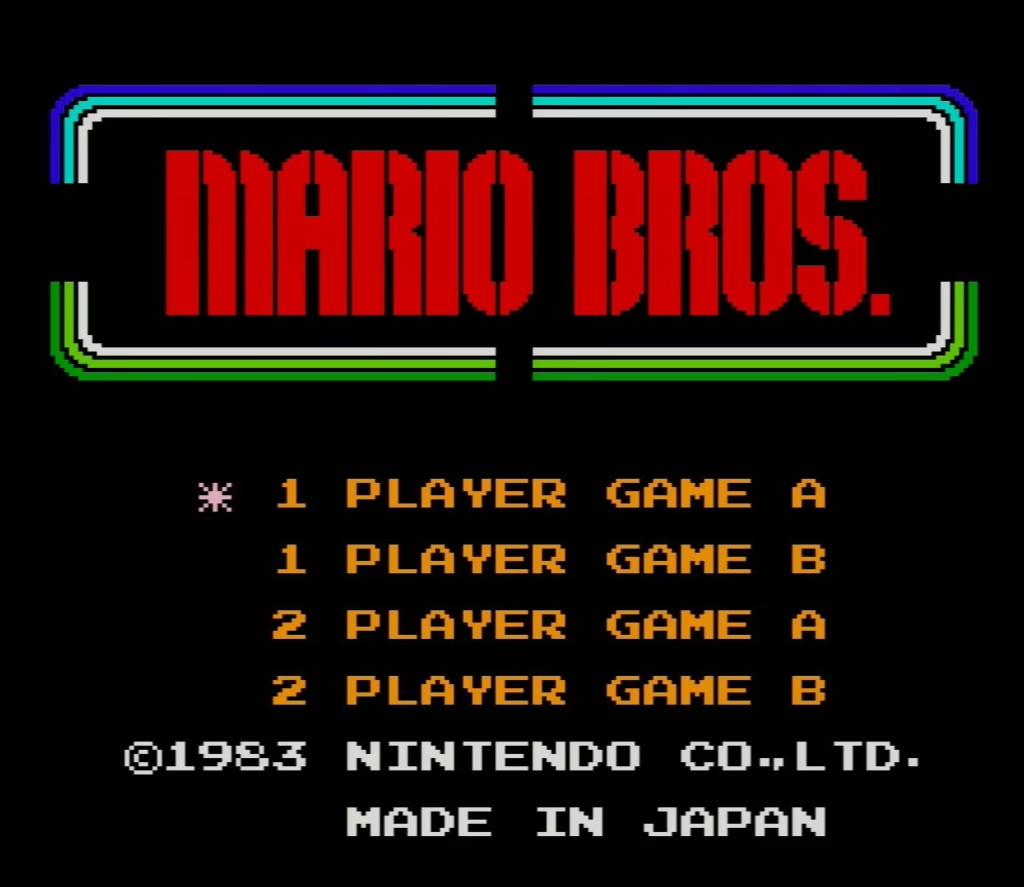
Nintendo’s original Mario Bros. (released in 1983) are included, along with Luigi, his brother, plus the Mario Kart series (since 1992).
Mario’s adventures have inspired generations of merchandise such as toys, trading cards, together with designer kimonos, also they have inspired a new animated feature film, The Super Mario Bros. Movie, spin-offs and theme parks.
Mario did emerge up from within arcade games just to become such a pop culture icon as well as a household name more than any of the other characters.
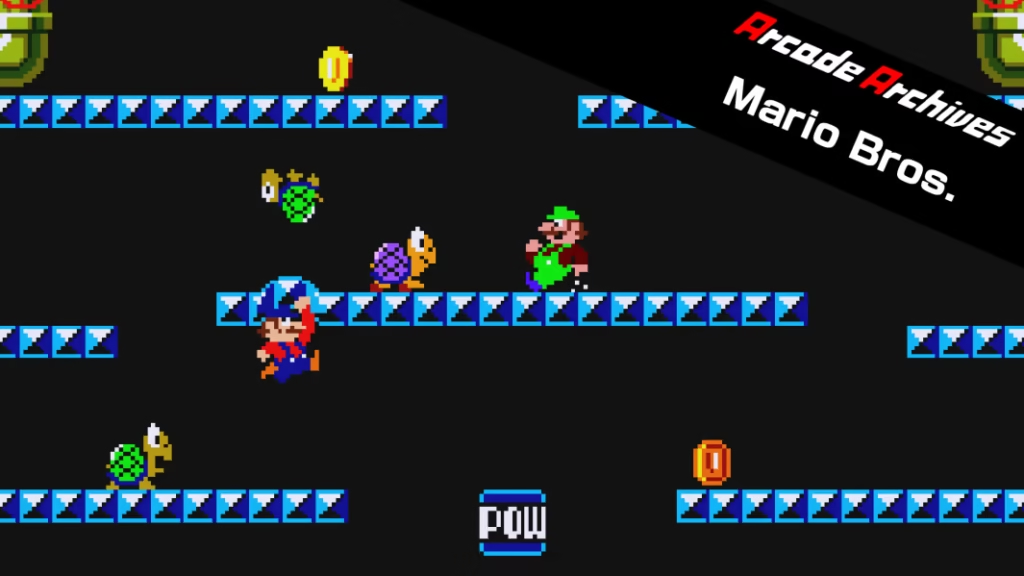
This brave tradesman began in 8-bit. In what way did this character turn into a global star? And how does his magic still hold up 40 years later?
Let’s see how Mario made the journey from video games to Hollywood?
How did the game get its name ‘Mario’
Mario’s rise to popularity was quite humble. He first appeared not in Super Mario Bros., but in the arcade game Donkey Kong.
Developed in 1981 by Nintendo artist Shigeru Miyamoto, the villain of this game was a giant gorilla armed with a large number of barrels.
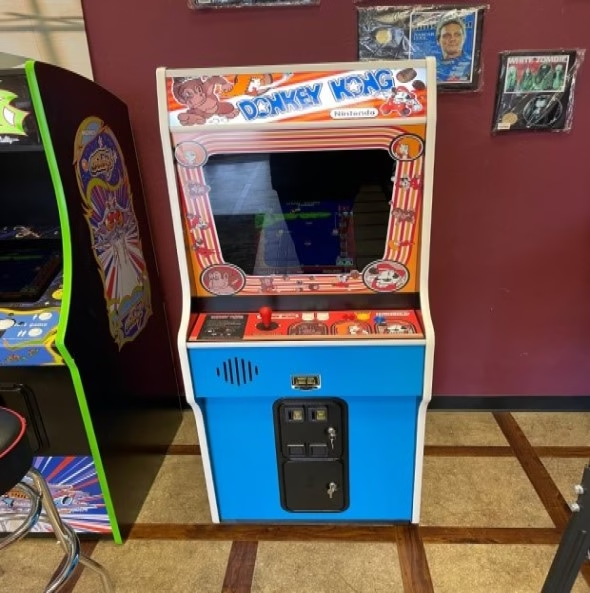
Its hero was a man wearing a red cap and a boiler suit. This character was a carpenter named Jump-man and his mission was to save his girlfriend Pauline.
Before appearing in Donkey Kong, the character was called ‘Osan’ (‘middle-aged man’) in Japanese. It was later renamed ‘Mr. Video’.
It was eventually changed to ‘Mario’ after Mario Segale, the boss of Nintendo’s US headquarters.
Mario’s creator Shigeru Miyamoto drew inspiration from global pop culture and envisioned a protagonist who would make recurring cameos in various games, similar to the way Alfred Hitchcock used to make cameos in the films he directed.
“Mario always looked iconic, even in low-res pixel art”
Mario was merely an 8-bit character concept: fat, shiny, and recognizable by sight, with a hat and moustache.
He was initially given another background before Mario Bros. (1983) came to the arcades, from carpenter to Italian-American plumber.
The transformation was in line with the piped terrain of the game and Miyamoto’s fondness for Western comics. Yet the game remained simple and straightforward.
The magic of simplicity
Shigeru Miyamoto, creator of Mario, explained Mario’s universal appeal in an NPR interview from 2015. Miyamoto stated that “The reason Mario became so popular is because everything that happens within a Mario game is something that happens for every human being in what would be a normal way.”
“Everyone is afraid of falling from heights. If there’s a gap to cross, everyone will run and try to jump over it. The simplicity of the experience and the interactive nature of controlling the character, as well as seeing the immediate impact on screen, really touched people’s hearts.”
Mario is obviously a ‘hero,’ but his appearance transforms in interesting ways during various eras.
The transformative abilities of Mario initially appeared in Super Mario Bros. (1985), whereby items in the Mushroom Kingdom inflate him and imbue him with new abilities.
Every character is awesome
From then till now every character of Mario has been unique.
Whether in the form of flying tanuki (Japanese raccoon dog, Super Mario Bros. 3, 1988), flying bee in Super Mario Galaxy (2007), or feline player character in Super Mario 3D World (2013).
His roles continued to evolve, from Dr. Mario (a 1990 puzzle game) to artist/musician (Mario Paint, 1992) and athlete (racing, soccer, tennis, and the Nintendo/Sega crossover series Mario & Sonic at the Olympic Games).
Even Mario’s hat received a second lease of life in Super Mario Odyssey (2017).
Meanwhile, the range of characters supporting Mario has also grown rapidly.
Regardless of which main characters these characters play in their respective games, they are ultimately related to each other – brothers (Luigi), companions (Princess Peach, Yoshi), or rivals (Donkey Kong, Bowser, Wario).
The Music That Stuck With Us
Mario’s music and sound effects have also proven to be game-changers for the game.
Composer Koji Kondo’s iconic tunes and movement effects have been a part of every iteration of Super Mario Bros. since (1985).
American voice actor Charles Martinet popularized his cartoonish catchphrase (“Let’s-a-go!”).
Even the first Mario Bros. game had little musical tunes like these that instantly bring back memories of Mario.
“That ‘coin drop’ sound is probably just two very high notes,” says Galen Waltkamp-Moon, composer and founder of the London Video Game Orchestra. “That’s what makes it memorable.”
He adds, “Mario always looked iconic, even in low-res pixel art. I remember humming along to his tunes as a 6-7 year old, which wasn’t possible with any other game at the time. The music was accessible to all ages, changed almost every other beat, and kept the audience engaged.”
cameo on the big screen
Bringing popular video game characters to the silver screen has often proved to be a big risk for producers. However, a new wave is now being seen.
Recent movies like Sonic the Hedgehog performed poorly at the box office and were “floundering” in viewers’ perceptions.
The live-action movie Super Mario Bros. in 1993 was a huge box office bomb.
This movie had an excellent array of actors on one side and best-in-class visual effects on the other.
Bob Hoskins, the famous actor who played Mario, described it as the “worst film” of his career in an interview with The Guardian in 2007.
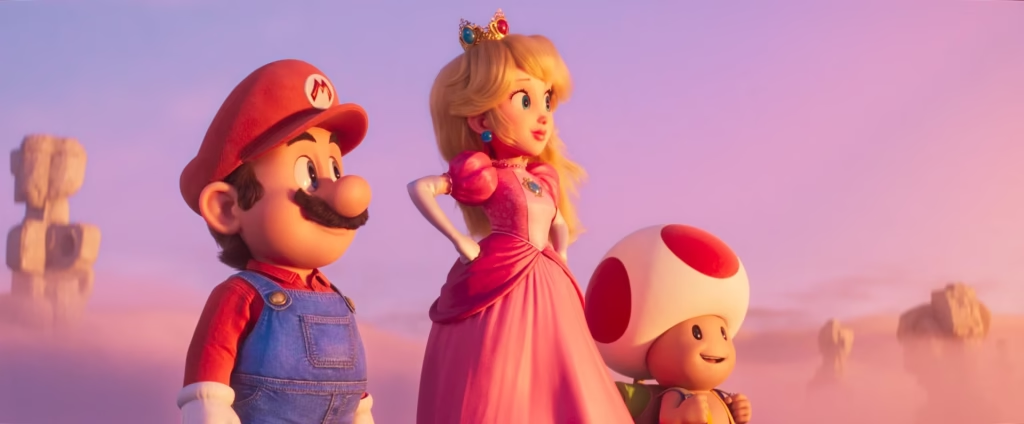
The new Super Mario Bros movie has been mired in controversy even before its release. Fans have expressed their displeasure over Hollywood star Chris Pratt’s voice for Mario in the movie.
However, the film’s co-director Aaron Horvath says there is no problem with this and it is in line with the spirit of the film.
Mario’s presence is not only seen in games, but also in everything from internet memes to conceptual art and blockbuster projects.
American artist Corey Arcangel remade the Super Mario World computer game in his 2002 installation Super Mario Cloud.
Another artist, though, made in 2015 a game entitled “Syrian Super Mario,” that showed the plight of refugees and the hardships that they endure in gaining shelter.
Mario is now being put into the collections of big galleries and institutions around the world.
Mario’s games have connected different generations together. In this fast-changing world, he is a permanent and familiar friend.
What’s your first memory of playing Mario? Share it with us in the comments below.
Recommended Reads: