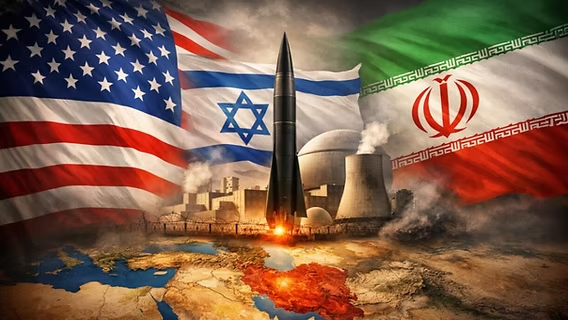
The US-Israeli war on Iran is the central global story right now. It is being reported around the clock in global media, with news of mounting casualties and escalation dominating the headlines. It is not simply a act of war, but an act of aggression with several hidden motives, and we have seen this before. Crucially, it’s imperative to question a couple of things?
Is it simply a campaign against nuclear deterrence, as it claims? Or is it the latest chapter of a longer story shaped as much by regime change ambitions as by a deeper pursuit of control over the Middle East’s political order, energy systems, and strategic resources?
And why has a conflict that began with airstrikes over Tehran already escalated into a broader air and missile war across the Gulf, with pressure on the Strait of Hormuz now destabilizing the global energy system?
Operation Epic Fury and the Escalation of Total War
In early 2026, the United States and Israel launched coordinated strikes across Iran. Claiming to target nuclear facilities, missile infrastructure, and senior command networks, under what Washington called Operation Epic Fury. But the pattern of strikes quickly extended beyond those categories, killing Iran’s Supreme Leader Ayatollah Ali Khamenei and relentlessly hitting civilian areas across Tehran, including residential districts and a girls’ school. Across the first phase of the war, more than 1,000 civilians were reported killed, including at least 180 children, with thousands more injured. The most severe single incident came in Minab. In Iran’s Hormozgan province, a strike hit the Shajareh Tayyebeh elementary school during class hours, killing well over 150 children, most between the ages of seven and twelve. This is likely the largest number of child casualties in a single U.S. military attack since the My Lai massacre in Vietnam in 1968. But the miserable fact that this doesn’t shock the conscience of a state that has allowed, infact even facilitated, the genocide in Palestine for years now. This shows that such outcomes are no longer seen as exceptional but rather expected.
The timing and scale of the operation suggest something more deliberate. Negotiations with Iran had not collapsed, they were rather overtaken by a miscalculated war that has now expanded far beyond its initial scope, where the trajectory wasnt anticipated really anticipated by the Trump administration.
AI Warfare and the Shrinking Margin for Civilian Protection
This pattern is not just operational, infact it reflects how modern targeting works. The US has increasingly relied on AI-assisted systems to process intelligence at scale, compressing the time taken for decisions into mere seconds, or rather instantaneously. But speed has consequences. When targeting cycles shrink, the margin for error narrows, and civilian spaces become statistically more vulnerable.
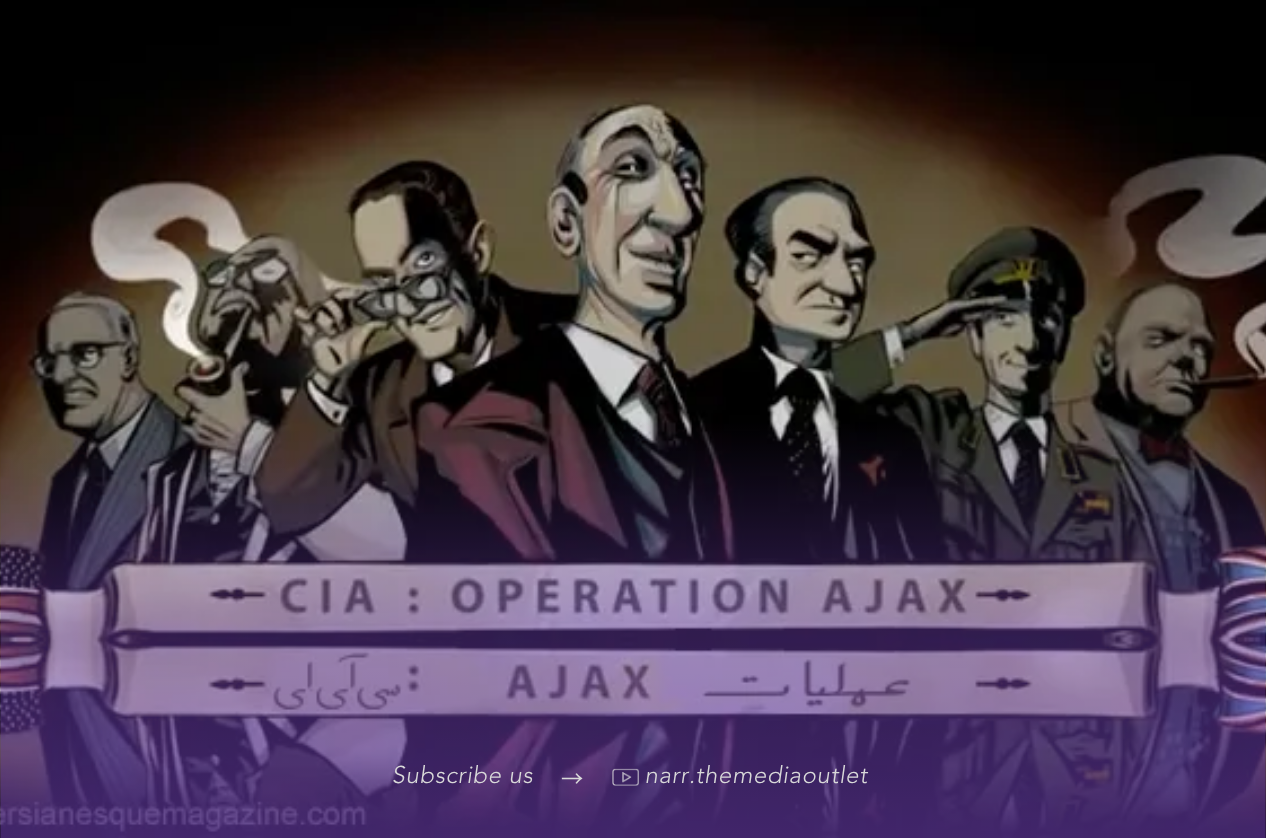
To understand why Iran interprets these strikes not as limited deterrence but as existential pressure, you have to go back. Not just to 1953, but to what followed it. When the United States and Britain orchestrated Operation Ajax and removed Prime Minister Mohammad Mossadegh, it was not just a regime change. It established a pattern. That control over Iran’s political direction could be externally shaped when strategic interests, especially regarding oil trade, were at stake. That pattern didn’t end with the Shah. It re-emerged through sanctions regimes, covert operations, and repeated threats of military action.
Missile Cities and the Logic of Asymmetric Deterrence
Even Iran’s missile doctrine is shaped by this history as well. During the Iran-Iraq War in the 1980s, Iranian cities were repeatedly hit by Iraqi missiles while Western powers largely backed Baghdad. This made Iran realize that its survival and military might depends depends not on air power, which it lacks, but rather on missiles that can be hidden in vast unbbderground tunnels known as Iran’s missile cities, dispersed, and launched quickly. What began as imported Scud variants evolved into systems like Fateh and Sejjil; not just weapons, but a strategy of endurance.
Expanding the Battlefield: From Territory to Infrastructure
Within days of strikes, the conflict expanded beyond Iran’s territory, spilling into the gulf as well. Israeli attacks on fuel depots, ports, power stations, transportation corridors and logistics facilities around Tehran ignited petroleum fires across the capital, sending thick smoke over multiple districts and prompting warnings of contaminated rainfall carrying toxic pollutants from burning oil infrastructure. But this was not only about damage; it was about capacity. Weakening Iran’s economy limits its ability to sustain both domestic stability and regional alliances in Lebanon, Syria, etc, that are also now vulnerable to Israeli influence.
Iran’s response followed a different logic, one rooted in its historical constraints. Instead of direct confrontation, it expanded the battlefield horizontally. Ballistic and cruise missiles, and armed drones were launched toward the Gulf countries hosting US military facilitiesf, i.e; Saudi Arabia, UAE, Bahrain, Qatar.
This approach is not new. It reflects a doctrine developed over decades: if you cannot match your adversary’s military strength, you can threaten the infrastructure that sustains the global economy – as a pressure for leverage.
The Strait of Hormuz and the Global Energy Shock
At the centre of this strategy lies the Strait of Hormuz. Roughly 20 percent of the world’s oil passes through it. Iran does not need to close it. It only needs to make it uncertain. Strikes near shipping lanes, attacks on energy infrastructure, and temporary shutdowns like the UAE’s Ruwais refinery were enough to push oil prices above $100 and force shipping companies to reroute. The war, in effect, moved from territory into the global economy.
Limits of Air Power and the Illusion of Decisive Strikes
For the United States and Israel, the campaign relies on a familiar assumption, that air power can produce strategic outcomes. Precision strikes, bunker-busting munitions, and real-time intelligence can degrade infrastructure and eliminate leadership targets. But this assumption has been tested before. From Vietnam to Iraq, air power has consistently struggled when objectives are unclear or expand beyond limited goals. The current campaign reflects the same tension. If the objective is to degrade Iran’s missile capability, then success is measurable. But if the objective is regime collapse, the strategy becomes far less coherent. Because unlike what most presume, Iran’s system is not centralized in a way that allows for quick decapitation. Its missile forces are mobile, its infrastructure buried, and its command structure designed for redundancy. Even after sustained strikes, launches continue. That is not failure of execution; it is a reflection of design.
Humanitarian Costs and the Strain on International Law
However, what consistent and most troublesome is the humanitarian cost, that is accelerating day by day. More than 880,000 people have been displaced in the first phase of the war. This raises not only moral questions, but legal ones aswell. International humanitarian law requires distinction between military and civilian targets, and proportionality in the use of force. Yet repeated strikes on civilian infrastructure, schools, hospitals, residential areas, etc suggest these principles are under strain in practice.
And this isnt exclusive to one side, but the scale, precision, and technological capacity of US and Israeli forces mean that capacity and responsibility; are different. Iranian military capacity nor missiles can reach the American soil, but US backed Israel has established enough arsenal strength to harm palestinians, iranians, lebanon, and syria.
Escalation Pathways and the Risk of Nuclear Drift
Beneath the current conflict lies a deeper risk. Iran remains short of a nuclear weapon, but the war may shift its calculations. Historically, states under existential threat accelerate deterrence strategies. At the same time, Israel’s long-standing objective, as it proclaims, remains that of preventing Iran from reaching nuclear capability.
This creates a cycle. Pressure leads to acceleration. Acceleration leads to further pressure. The risk is not immediate nuclear war, but a steady movement toward it. For now, the conflict remains contained but unstable. Three trajectories are visible.
-The first is containment: a prolonged campaign of infrastructure strikes, cyber operations, and proxy warfare without direct invasion.
-The second is regional escalation, drawing Hezbollah, Gulf states, and potentially direct US ground operations into the conflict.
-The third, and most dangerous, is strategic escalation, where nuclear deterrence enters the equation.
A War Shaped by History, Not Just Strategy
What this war ultimately reveals is not just a contest of weapons, but of historical trajectories. The United States and Israel are applying a model of technological dominance shaped by air power and precision. Iran is applying a model shaped by decades of vulnerability; dispersion, endurance, and indirect pressure. Neither model has yet produced a decisive outcome. And until one does, the war is likely to continue; not as a single event, but as an expanding system shaped as much by its past as by its present.