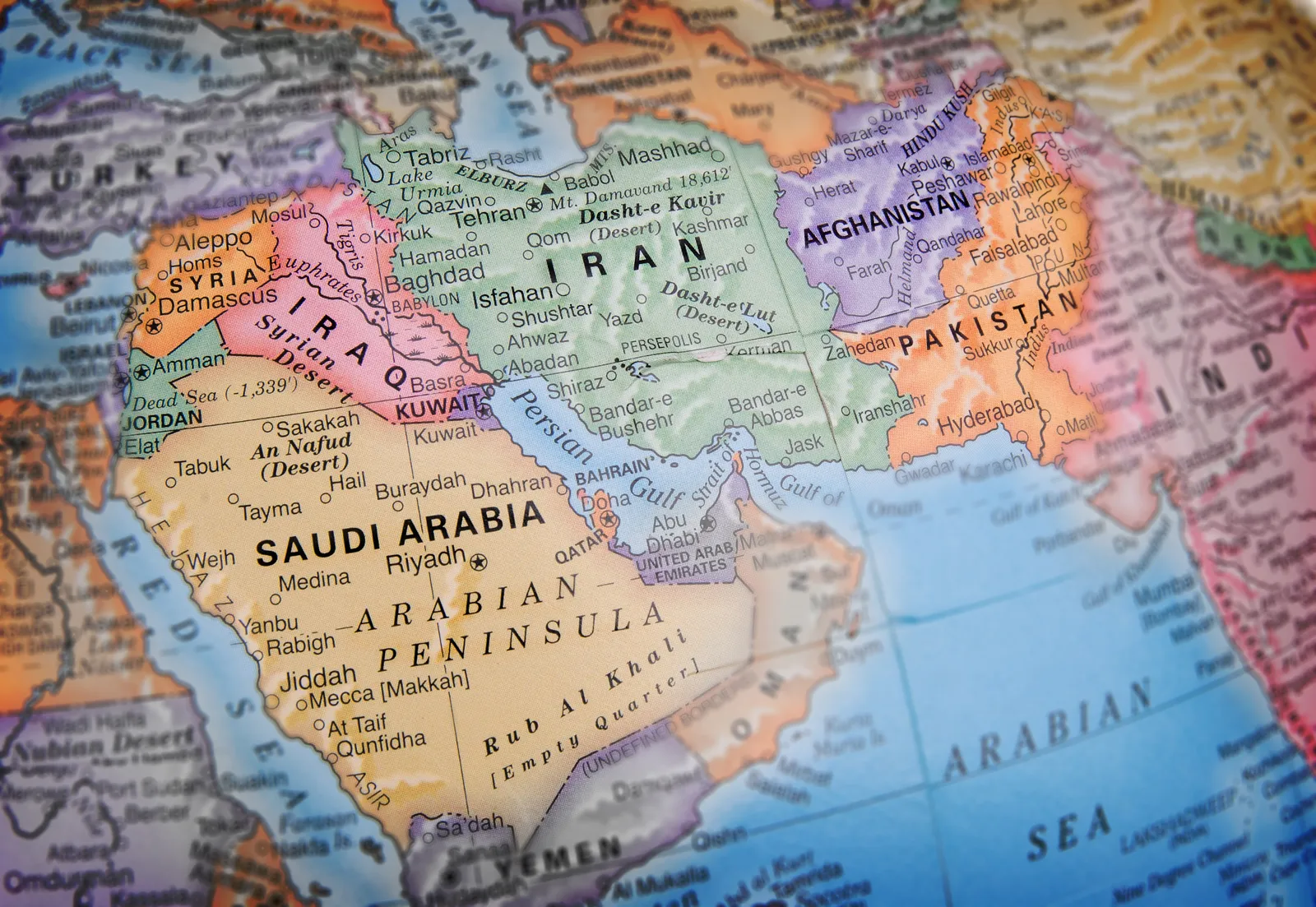
The history of conflict in the Middle East spans thousands of years and continues to shape today’s geopolitical crises.
The roots of the Middle Eastern conflict are not to be found in Western conference rooms or colonial maps alone. They run through bazaars, mosques, and tribal councils that long predate any European intervention. Understanding this history requires centering the agency of the region’s own peoples.
The long memory of a region that never forgot its sovereignty
To examine the history of conflict in the Middle East through a genuinely informed lens, one must resist the temptation to begin the clock in 1916 with the Sykes-Picot Agreement. The civilizations of Mesopotamia, the Levant, and Persia carried sophisticated systems of governance, trade, and theological authority for millennia before European powers arrived. The Ottoman Empire, for all its contradictions, functioned as a relatively coherent pluralist polity for four centuries. When it collapsed, what replaced it were not organic nations but externally engineered constructs, a trauma whose reverberations are inseparable from every modern conflict in the region.
The 1948 Arab-Israeli War, what Palestinians call the Nakba, or catastrophe, is understood very differently depending on which archive one consults. The Western narrative tends to foreground Israeli state-building and Cold War geopolitics. The indigenous perspective, however, is one of mass displacement. Over 700,000 Palestinians fled or were expelled, creating a refugee crisis that remains unresolved more than seven decades later. This foundational rupture is the central gravitational force around which every subsequent regional conflict has orbited. This remains central to the history of conflict in the Middle East.
The Islamic Revolution and the restructuring of regional power dynamics
The 1979 Iranian Revolution is perhaps the most consequential geopolitical shift in the modern Middle East, and yet it is routinely analyzed in Western scholarship primarily through the lens of the hostage crisis or U.S.-Iran relations. From within the region, the revolution represented something far more seismic: the emergence of an ideological state willing to challenge the Arab-Sunni order, weaponize Shia political theology, and build a transnational network of resistance movements, from Hezbollah in Lebanon to Hamas in Gaza to the Houthis in Yemen. Scholar Mehrzad Boroujerdi has noted that Iran assumed the self-appointed role of “guardian of the Muslim and Arab world,” an ideological project that continues to structure regional alliances and enmities today.
“The Iranians have always paid attention to the street and nonstate actors, their principal allies, whether Hezbollah in Lebanon, militias in Iraq, or Hamas in Gaza.” _ Ray Takeyh, CFR
Sectarianism as political instrument, not ancient hatred
One of the most persistent and misleading framings of Middle Eastern conflict is the idea of an eternal Sunni-Shia war rooted in theological enmity. This fundamentally misreads the evidence. As scholars of the region have consistently argued, sectarian identity becomes politically salient not because of religion per se, but because elites weaponize it during periods of insecurity and power competition. The U.S. invasion of Iraq in 2003 is perhaps the clearest modern example: by dismantling the Baathist state without any coherent successor framework, Washington inadvertently enabled the rise of Iranian regional influence and ignited a sectarian civil war that had no organic precedent of that scale in Iraq’s modern history.
Non-state actors and the transformation of Middle Eastern warfare
A defining feature of conflict in the Middle East since the 1980s is the primacy of non-state actors. Hezbollah, Hamas, the Houthis, and various Iraqi militias are not simply “terrorist proxies”, a reductive framing that strips them of political complexity. These organizations emerged from genuine social grievances: Israeli occupation, political marginalization, economic despair, and the absence of accountable governance. They became military players in the 1980s, evolved into political parties in the 1990s, and by the 21st century had become the primary security challenge facing Israel and the United States alike. Their persistence reflects a structural failure; i.e., the inability of existing state and international frameworks to address the legitimate demands of Arab and Muslim populations living under occupation or authoritarian rule.
The Arab Spring and the limits of transformation
The uprisings of 2010–2011 briefly reframed the region’s conflicts not as geopolitical chess between great powers but as struggles of ordinary people against authoritarian states. Mohamed Bouazizi’s self-immolation in Tunisia catalyzed something that no foreign policy strategist had anticipated. Yet the aftermath;i.e., the civil war in Syria, military reconsolidation in Egypt, state collapse in Libya and Yemen, revealed a structural truth: the “fierce state,” as political scientist Nazih Ayubi described it, rules not through legitimacy but through coercion. When that coercion fails, what emerges is not democracy but fragmentation.
History as a living wound
The Middle East conflict is not a puzzle awaiting a Western solution. It is a living historical process shaped by imperial legacies, unresolved displacement, resource competition, and the aspirations of hundreds of millions of people who have rarely been the authors of their own political fate. This reflects in today’s crisis, whether its in Iran, or Lebanon, or Yemen, Syria or Iraq; they are all brewed by the same actor who weaponizes and aggarvates internal divisions for economic gains and imperial incentives.