Thirty-eight days into a war that has reshaped the Middle East, killed over 2,000 Iranians, displaced more than 1.2 million Lebanese, sent Brent crude soaring past $109 a barrel, and brought the global economy to the edge of an energy catastrophe, the world’s best hope for peace is being routed through a country that, barely a year ago, was teetering on the edge of debt default and diplomatic isolation.
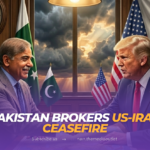
Pakistan, its army chief working the phones through the night, its foreign minister hosting counterparts from Turkey, Saudi Arabia, and Egypt, its capital lending its name to a draft peace framework; i.e., the Islamabad Accord, has emerged as the sole functioning communication channel between the United States and Iran. That is both a remarkable achievement and a sobering commentary on how thoroughly the traditional architecture of international diplomacy has collapsed.
The US-Iran Conflict and the Strait of Hormuz Crisis
Donald Trump’s Ultimatum and Global Shockwaves
On Easter Sunday, April 5, US President Donald Trump posted an expletive-laden message on Truth Social that would have been extraordinary on any day. He threatened to bomb Iran’s power plants and bridges by Tuesday 8PM Eastern Time if Tehran failed to open the Strait of Hormuz. The post, addressed to “crazy bastards” and signed off with “Praise be to Allah”, was not merely inflammatory rhetoric. It reflected a genuine strategic inflection point. Trump had already extended his original Hormuz deadline twice. This time, White House officials confirmed it was final.
Oil Prices, Economic Fallout, and Global Instability
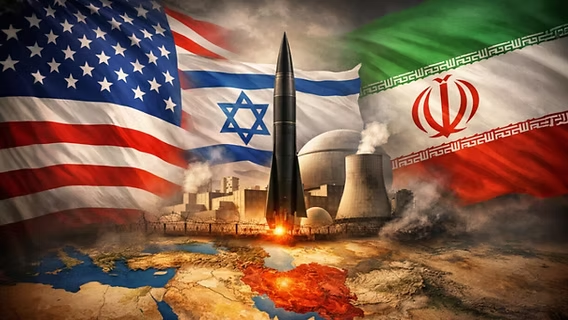
The Strait of Hormuz, a narrow waterway through which nearly one-fifth of the world’s oil and liquefied natural gas flows, has been under a de facto Iranian blockade since February 28, when the United States and Israel launched their joint offensive that killed Supreme Leader Ali Khamenei and triggered the current war. Shipping traffic through the strait has since collapsed by over 90%, not because Iran has sunk every vessel, but because war-risk insurance has become prohibitively expensive. Hitting a tanker every few days was enough. Modern economies, as University of Chicago political scientist Robert Pape observed in a striking New York Times essay published the same day as Trump’s ultimatum, do not merely require oil, they require oil delivered on time, at scale, with predictable risk.
That reliability has shattered. Brent crude spot prices hit $141 per barrel last Thursday, the highest since the 2008 financial crisis. The S&P 500, despite a modest 3.4% recovery last week on ceasefire hopes, remains deeply rattled. JPMorgan CEO Jamie Dimon warned Monday that the war could drive inflation and interest rates significantly higher. The longer the strait stays closed, the more the global economy drifts toward the kind of stagflation not seen since the 1970s.
Iran’s Strategic Defiance and Negotiation Leverage
Tehran’s Conditions for Ceasefire
Tehran’s response to Trump’s ultimatum was swift, calibrated, and strategically coherent. The IRGC Naval Command announced it was preparing for a “new Persian Gulf order,” declaring that the strait would “never return to its former state, especially for the US and Israel.” Iran’s central military command warned of “much more devastating” retaliation if civilian infrastructure is targeted. Parliament Speaker Mohammad Bagher Ghalibaf wrote in English on X that Trump’s moves were dragging the United States into “a living HELL for every single family.”
Foreign Ministry Spokesman Esmaeil Baghaei, meanwhile, confirmed that Iran had formulated its own set of demands and had rejected the US’s earlier 15-point plan as “excessive” and “illogical.” He was careful, however, to frame Iran’s engagement with mediators not as weakness but as confidence. Iran, he said, is reviewing Pakistan’s ceasefire proposal, but will not accept deadlines, will not reopen the Strait as part of any temporary arrangement, and will only consider a permanent ceasefire with binding guarantees that neither the US nor Israel will attack again.
Military Pressure vs Diplomatic Engagement
This is not the posture of a nation that has been “decimated,” as Trump claims. It is the posture of one that understands its leverage. Iran does not need to win this war. It only needs to outlast Trump’s patience, and the IRGC, despite catastrophic losses including the killing on Monday of intelligence chief Maj. Gen. Seyed Majid Khademi (the second consecutive IRGC intelligence chief assassinated in under a year), appears to be calculating exactly that.
Pakistan’s Unexpected Rise as a Global Diplomatic Power
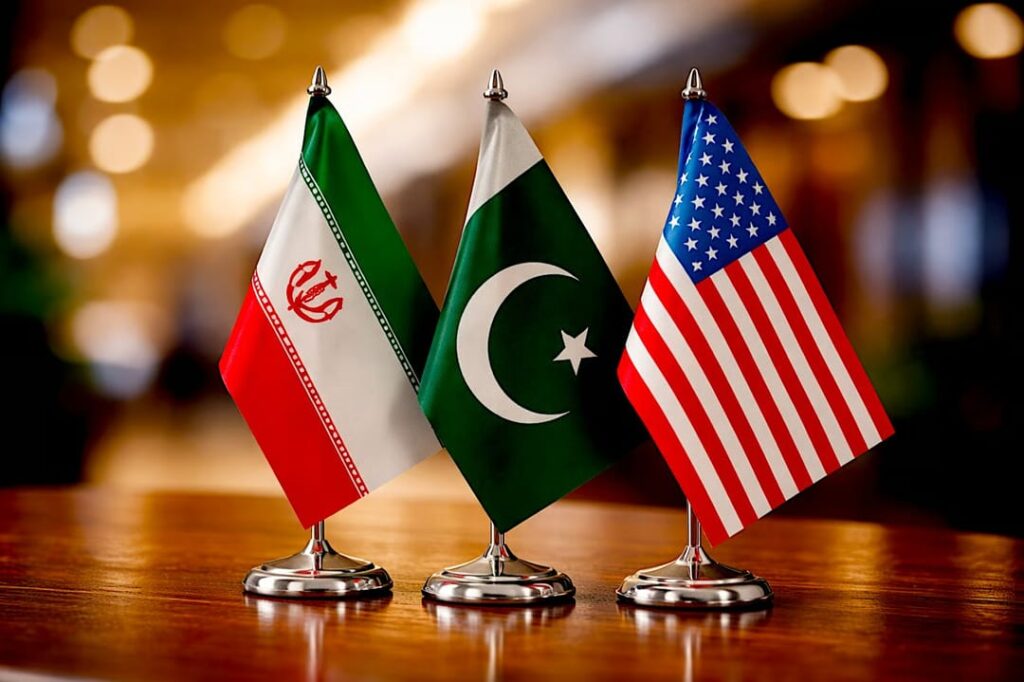
Asim Munir and the New Diplomatic Doctrine
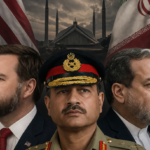
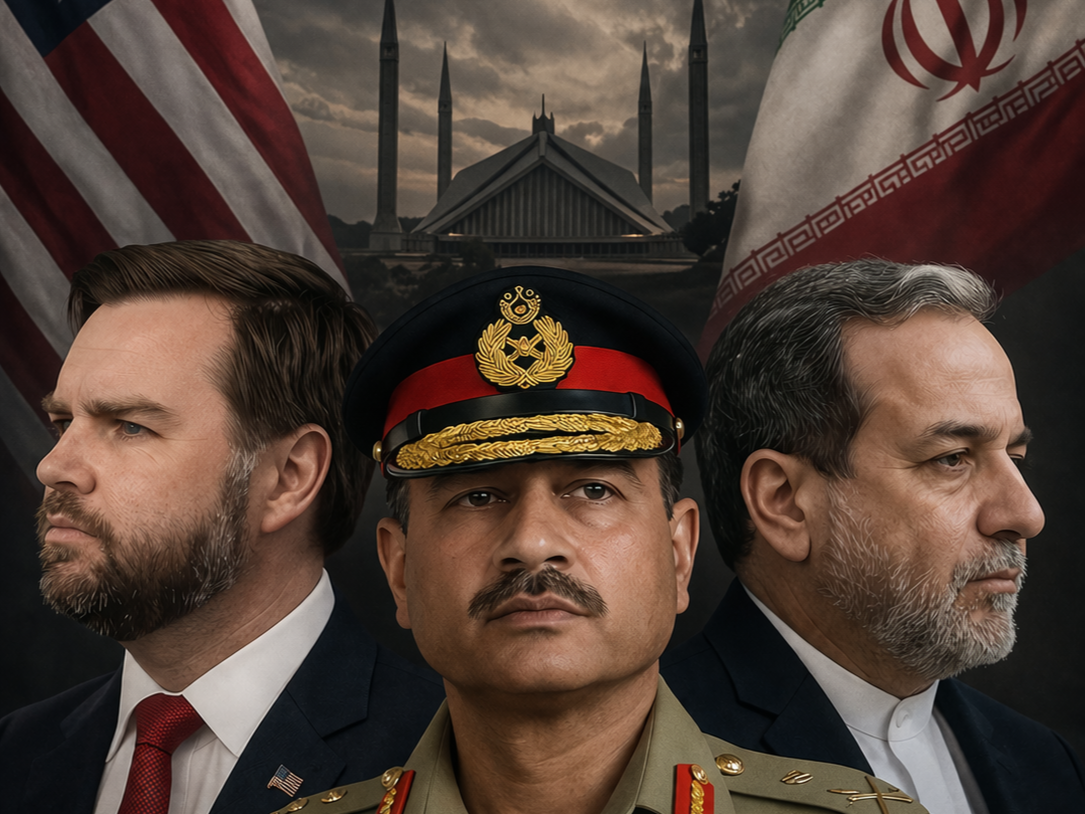
Into this dangerous vacuum stepped Field Marshal Asim Munir, Trump’s self-described “favourite field marshal”, who has spent the past several weeks constructing what may be the most consequential diplomatic initiative in Pakistan’s history.
Inside the Proposed Islamabad Accord
Framework of the Ceasefire Plan
Munir was reportedly on the phone “all night long” with US Vice President JD Vance, Special Envoy Steve Witkoff, and Iranian Foreign Minister Abbas Araghchi, according to a source cited by Reuters. The framework he has assembled, tentatively dubbed the “Islamabad Accord”, is elegant in structure if fragile in status: an immediate ceasefire formalised electronically through Pakistan as sole intermediary, immediate reopening of the Strait of Hormuz, followed by 15 to 20 days of in-person final negotiations in Islamabad. The broader settlement would include Iranian commitments to abandon nuclear weapons in exchange for sanctions relief and the release of frozen assets.
Pakistan’s Foreign Office, characteristically, declined to confirm or deny the existence of the framework. Spokesperson Tahir Andrabi said only that “the peace process is ongoing”, the diplomatic equivalent of acknowledging that something significant is happening while refusing to own it publicly should it fail.
From Economic Crisis to Strategic Relevance
Pakistan’s rise to this moment did not happen overnight. Analysts trace it to two decisive turning points. The first was Pakistan’s arrest, in early 2025, of a suspect linked to the 2021 Kabul airport bombing that killed 13 US soldiers, earning public gratitude from Trump and reopening intelligence-sharing channels that had been frozen for years. The second was the May 2025 Pakistan-India air conflict, a 90-hour confrontation in which Pakistan claimed to have downed at least six Indian fighter jets. Trump credited himself with brokering the ceasefire; Pakistan and PM Shehbaz Sharif obliged him by nominating him for the Nobel Peace Prize. New Delhi was furious. Islamabad got the White House.
Since then, Munir, only the second officer in Pakistan’s history to hold the rank of Field Marshal, and now also Chief of Defence Forces with authority over all three service branches, has operated as a soldier-diplomat of extraordinary range. He has met military leaders from Qatar, Egypt, Jordan, the UAE, and Libya. The mutual defence pact with Saudi Arabia in September 2025 was also signed by him. Furthermore, he was the only serving military chief at Davos this year. In the context of mediation efforts in the current crisis, Munir has spoken with JD Vance “multiple times” since the Iran war began, according to Reuters.
Role of JD Vance and Abbas Araghchi in Backchannel Talks
India, notably, has been left watching from the sidelines. Opposition lawmaker Shashi Tharoor captured New Delhi’s embarrassment precisely: “I have been calling for almost three weeks now for India to take a leading stand. Now, apparently, Pakistan, Egypt and Turkey have done it. Good luck to them, but India gets no credit while Pakistan is holding the peace talks.”
Pakistan’s Diplomatic Gamble and Internal Risks
Economic Pressures and IMF Challenges
Yet Pakistan’s moment of diplomatic triumph is shadowed by serious vulnerabilities. On Monday, the UAE, for the first time in seven years, declined to roll over a $3 billion deposit, delivering a shock to Pakistan’s foreign exchange reserves that stand at just $16.4 billion, barely enough to cover three months of imports. A $1.3 billion bond repayment to international investors is due this month. A $1.2 billion IMF instalment remains pending. The rupee is under pressure and the KSE-100 Index has shed 15% since the Iran war began.
Analysts warn that Pakistan is walking a tightrope. Its defence pact with Saudi Arabia could drag it into a conflict that inflames its own Shia community, the world’s second-largest after Iran’s. Its ongoing Afghanistan border conflict adds another layer of strategic stress. And domestically, the crackdown on PTI, the imprisonment of former PM Imran Khan, and the 27th Constitutional Amendment granting Munir sweeping powers and lifetime immunity have drawn sustained criticism from opposition parties, rights groups, and the United Nations alike.
“The civil-military leadership will need to be very careful of the role and extent of Pakistan’s involvement,” warns Arsla Jawaid of Control Risks. “Overplaying the mediator card could prove more damaging if not managed astutely.”
A Deal That Hasn’t Happened Yet
As of Monday evening, Iran had not formally responded to the Islamabad Accord. Two Pakistani sources confirmed to Reuters that despite “intensified civilian and military outreach,” Tehran had made no commitment. A fallback proposal, a 45-day temporary ceasefire discussed by Axios, is also on the table, but equally unconfirmed.
Trump, speaking at the White House Easter egg event, acknowledged Iran had made “a significant proposal” but said it was “not good enough.” He insisted his Tuesday deadline was final. He also mused, in remarks that alarmed analysts globally, that if it were up to him, he would “take the oil” and “make plenty of money.”
The world, then, ends this Monday in a peculiar state of suspended dread: a war neither side can cleanly win, a strait neither side can safely surrender, and a small South Asian nation, broke, diplomatically overextended, domestically fractured, holding the last open phone line between two powers whose next move could either end a war or ignite a wider one.
Pakistan did not choose this moment. But it has, against all odds, arrived at it.