
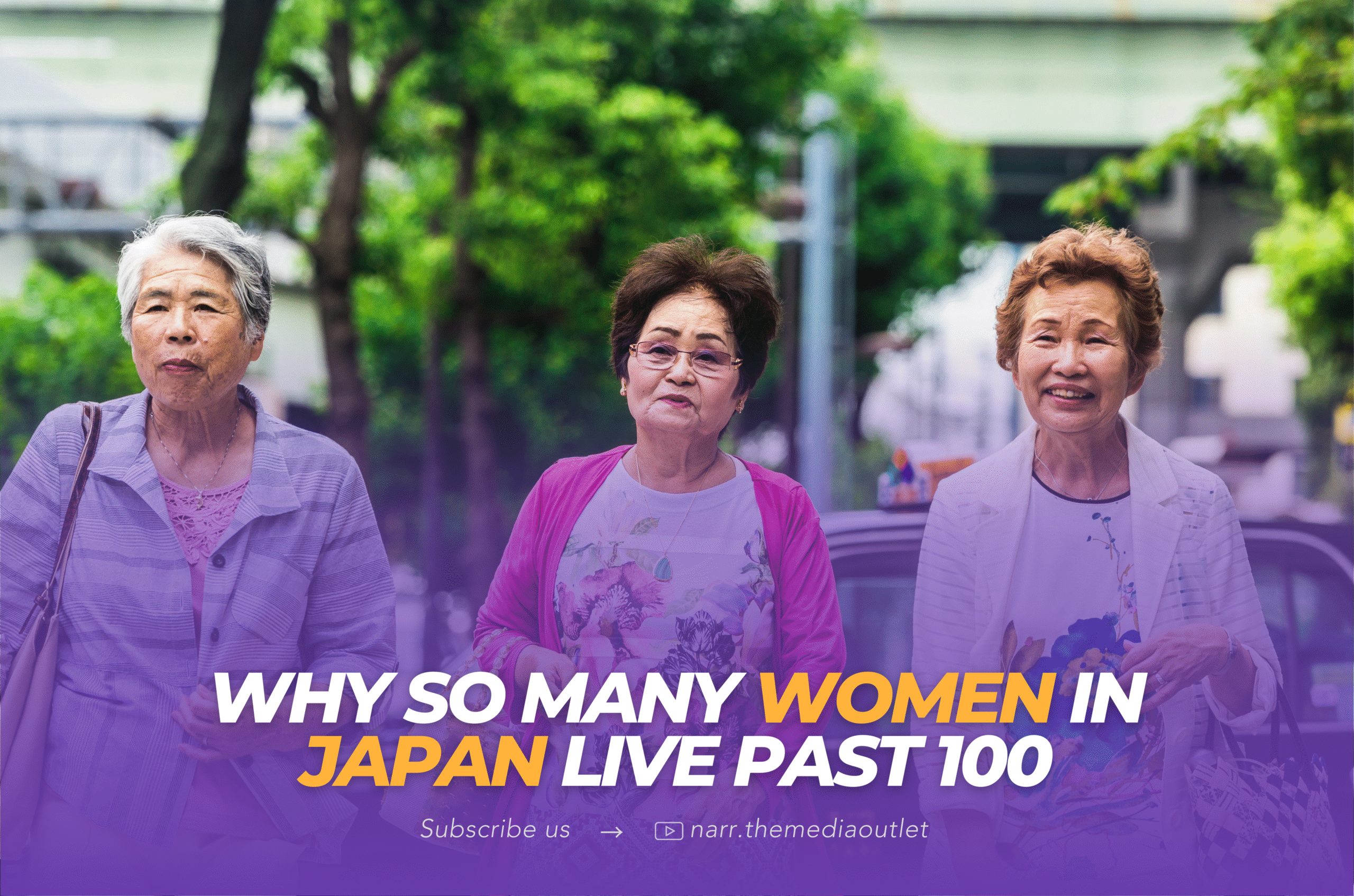
The Japanese government has announced that the number of people aged 100 or above in the country is nearly one lakh, which is a record.
This is the 55th consecutive year that a new record has been set. The Health Ministry said on Friday that the number of people who reached the age of 100 in Japan in September was 99,763.
The number of women in this is the highest at 88 percent.
Health Minister Takamaro Fukuoka wished the 87,784 women and 11,979 men happy longevity and thanked them for their “long years of contribution to society’s development.”
Japan boasts the world’s highest mean life expectancy, and is frequently referred to as hosting the world’s oldest population.
Nevertheless, as some studies have reported, there is contention over the true figure of individuals who are 100 years or older worldwide.
Japan is also known as one of the fastest-aging societies, where residents often eat healthy foods but have a very low birth rate.
The state gives gifts to people who reach the age of 100.
The oldest Japanese is Shigeko Kagawa, who is 114 years old and lives in Yamato Koriyama, a suburb of Nara City. The oldest man is Kiyotaka Mizuno, aged 111 and hailing from the coastal city of Iwata.
These statistics were announced on September 15th, Senior Citizens Day in Japan. That day is a national holiday in the country, and newcomers to the age of 100 are presented with a congratulatory letter and a silver cup from the Prime Minister.
The Health Ministry said that 52,310 individuals qualified this year.
Before the 1960s, Japan registered the fewest individuals aged over 100 years out of its entire population compared to any G7 nation but changed dramatically in subsequent decades.
When the Japanese authorities first started surveying individuals above the age of 100 back in 1963, there were only 153.
This number rose to 1,000 in 1981 and to 10,000 in 1998.
Why does longevity occur?
Heart disease and some cancers are the major killers of the world. They include breast and prostate cancer. A nation that has a low death rate or low rate of these illnesses is said to have a longer life expectancy.
Japan also has a very low rate of obesity, which is one of the main causes of the two diseases. In addition, an eating habit that takes less red meat and more vegetables and fish is also one of the main reasons.
The rates of obesity are especially low in women, and this can contribute to the fact that Japanese women live longer than Japanese men.
While sugar and salt consumption rose elsewhere in the world, Japan took a different route. Public health campaigns were able to convince individuals to cut down on salt.
But it’s not all about diet. Older Japanese individuals prefer to remain active throughout their lives. They walk more and use public transport more than older individuals in Europe and America.
Radio Taiso, a morning group exercise, is part of Japanese culture since 1928. It was invented to promote community spirit and public health.
This three-minute exercise is telecast and done in small groups all over the country.
Is the number of individuals living until the age of 100 years different?
Yet, a number of studies have challenged the veracity of the global population of more than 100-year-olds. They assert that the figure could be otherwise because of statistical flaws, dubious public records, and an absence of birth certificates.
In Japan, a 2010 government audit of family registers found the names of more than 230,000 people who were reported to be 100 years old or older but were unaccounted for. Some of these people had died decades earlier.
The reasons for the inaccurate count were attributed to incomplete records and the suspicion that some families may have tried to conceal the deaths of their elderly relatives and collect their pensions.
A national investigation was announced after the remains of 111-year-old Sogen Koto, believed to be Tokyo’s oldest person, were found in his home 32 years after his death.