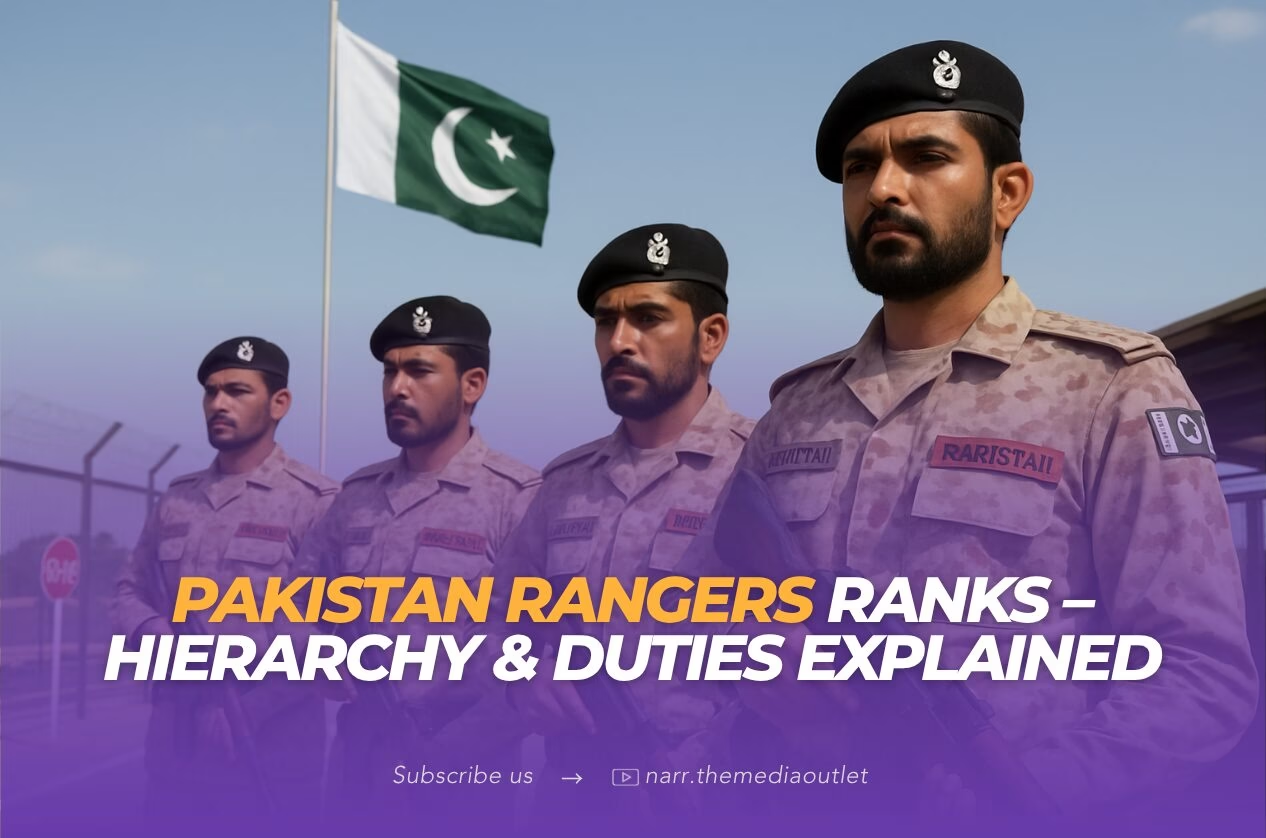
Most people in Pakistan have seen Rangers on TV or standing guard somewhere — at the borders, in Karachi, or during some operation. But when you ask around, not many actually know who they really are or what their job is. Are they part of the Army? Do they work for the police? The answer is somewhere in between.
Who They Are and What They Do
The Rangers, in essence, are a civil armed force: this means they are not Army, but nevertheless, are trained and equipped to perform military-style duties. Put differently, they fall within the ambit of the Interior Ministry, not Defence. Their prime mandate is to guard the border with India and assist police whenever necessary in maintaining law and order.
There are two main forces — Punjab Rangers and Sindh Rangers. Both have their own headquarters and areas to cover. Punjab Rangers focus more on border duties, while Sindh Rangers handle internal security, especially in Karachi where they’ve been active for years.
Ranks and Chain of Command
The Rangers have a ranking system that’s pretty close to the Army’s. It starts from the top brass and goes all the way down to the foot soldiers.
- Director General (DG) – Runs the whole show; usually an Army Major General.
- Deputy DG – Helps manage different sectors.
- Sector Commander – Looks after a region or division.
- Wing Commander – In charge of a wing, like a battalion.
- Company Commander (Captain) – Handles field operations on the ground
Then come the Subedars, Havildars, Naiks, Lance Naiks, and finally Sepoys — the backbone of the force doing daily duties.
Promotions are based on the years of service, discipline, and performance in the field.
What Their Job Looks Like
They conduct their work by combining military-style operations with support intended for the police. Their activities at the border involve guarding posts, preventing smuggling, and observing any possible infiltrations. Within cities, they assist the police in controlling protests, riots, and crime.
In Karachi, they’ve played a big part in bringing crime down. They’re also deployed to protect sensitive places — airports, power plants, and major offices. And when floods or disasters hit, you’ll find Rangers helping in rescue work.
Training & Life Inside the Force
Training is tough. Recruits go through long hours of drills, shooting practice, and field survival. Their training schools are in Mandi Bahauddin and Karachi.
They’ve also started using more modern tools — like drones, CCTV systems, and secure communication networks. Rangers and their families get access to housing, medical care, and schools through the organization.
How You Can Join
If you’re thinking about joining, there are two main ways:
- Officers usually come through ISSB or direct induction.
- Soldiers (Sepoys) are hired through open recruitment drives.
You can check updates and apply on their official sites:
Applicants go through written, physical, and medical tests before getting selected.
Why They Matter
They may not get as much credit as the Army, but their work has a real impact. In the last decade, Karachi’s law and order situation improved a lot because of their operations. They also stand guard at the border day and night, making sure the country’s lines stay safe.
In short, they’re one of those forces people don’t talk about much — but everyone relies on when things get tough.
Quick FAQs
Are Rangers part of the Army?
Not officially. They report to the Interior Ministry but often work with the Army during joint missions.
Do they have the same ranks as the Army?
Pretty much. DG on top, sepoy at the bottom.
Can civilians apply?
Yes, anyone can apply if they meet the physical and educational requirements.
Do they get facilities like other forces?
Yes — housing, healthcare, education for kids, and post-retirement benefits.
Where are they most active?
Mostly in Karachi, Punjab border areas, and eastern regions facing India.
If you’re interested in learning more about other branches of Pakistan’s armed forces, check out: